How many blue collar workers can you name from ancient times?
Or even more recent times?
Ancient writers wrote about emperors, philosophers, princes, rich people - not of ordinary people, and certainly not of tortured criminals.
And yet, in 2000 years Jesus - or Yeshua, as he was known locally - has become not only the most famous person of all times but also the most written of and sung of person of all times. We count our years from his birth. He is sort of a familiar figure.
Yeshua was a Jewish itinerant teacher and healer with twelve disciples and probably several hundred other sympathizers.
He was arrested and publicly tortured, humiliated and executed. His followers went underground for fear of persecution.
And though, within a couple of months they were out on the streets of the very same town, telling everyone that they had seen him alive again.
The men that had put Yeshua to death were still in town and certainly not interested in seeing the killed man's movement gaining strength. They had some of his followers arrested, some killed, some they told not to speak about Yeshua.
But what they didn't do was to go to the grave and bring out the body of the man everyone was talking about and thus stop the rumors from spreading.
Why? Probably because the tomb was empty.
One of the persecutors of Yeshua’s followers became himself a follower after a dramatic experience, where he claimed to have met Yeshua. We have letters that this man - Saul of Tarsus, later known as Paul - wrote, where he tells about his experience. He became instantly a target of intense hatred from his previous allies, who now considered him a traitor. He traveled around the Mediterranean telling everyone who would listen about Yeshua. Later he and several of Yeshua’s original followers were put to death for what they claimed.
Yeshua’s followers held onto the story that they had seen him alive a few days after his horrible death. Not just barely alive, recovering from his wounds, but full of strength, a miracle, a conqueror of death. They had spoken to him and eaten with him. Now, either these men were lying or they really believed that they had seen him alive.
For decades, none of Yeshua’s original twelve followers recanted for fear of death, persecution or hardships. They could have had an easier life, but they stuck to their story. Can such a determination be based on lies? Can such a courage come from deception? Subsequent generations of believers in different parts of the world have been known to face death for their beliefs. But their beliefs were based on someone else’s witness. The original followers of Yeshua spoke of what they had seen themselves.
Whatever people found in the new faith, it was spreading fast.
According to Tacitus, a Roman historian, Christians were persecuted and put to death in large numbers in Rome during the reign of Nero in the 60s. This means that only 30 years after his death, Yeshua had a considerable following thousands of kilometers away from where he had lived. (https://en.wikisource.org/wiki/The_Annals_(Tacitus)/Book_15#44 )
Some 70 years after Yeshua’s death, a Roman official in Bithynia (in Northern Turkey) wrote to emperor Trajan that prior to his persecution of Christians, temples had been almost deserted and the business around sacrificial animals suffered because of the spread of Christianity. (https://cmuntz.hosted.uark.edu/texts/pliny-the-younger/letters-to-trajan.html - see letter 96)
Many emperors tried to wipe out Christians, some by very bloody and systematic campaigns. Then in the 300’s, Constantin the Great decided, instead of fighting the faith, to draw strength from it. Christians could finally gather freely without fear. The emperor even called himself a Christian. But being an emperor, Constantin’s language was power and prestige. With time the church became a career path, a land owner with impressive buildings and an elaborate liturgical life.
Throughout the long centuries which we now call the Middle Ages, faith became tradition, passed on through the institution of the church. God’s word was filtered through layers of hierarchy, with only the top guys having access to scripture. Ordinary people learned what their local priest told them.
What made reformation in the 1500’s so impactful was the discovery of printing press. New ideas could be spread quickly and to a large audience. And God’s word could be printed in large numbers. The Bible was translated to major European languages. In protestant areas, where the importance of direct access to God’s word was stressed, to know the BIble became a great motivation for many to learn to read. Bibles were still a luxury item until the 19th century when books became affordable to everyone. The literacy of ordinary people and their familiarity with the Bible paved the way for democracy to take root. Laws of Christian countries increasingly reflected principles found in the Bible.
The Bible is the story of God acting in history to save humanity. The central character in the Bible is Jesus. Jesus is the truth, thus, following his principles has lead to the flourishing of the West. What will happen when we as societies turn our backs to him?
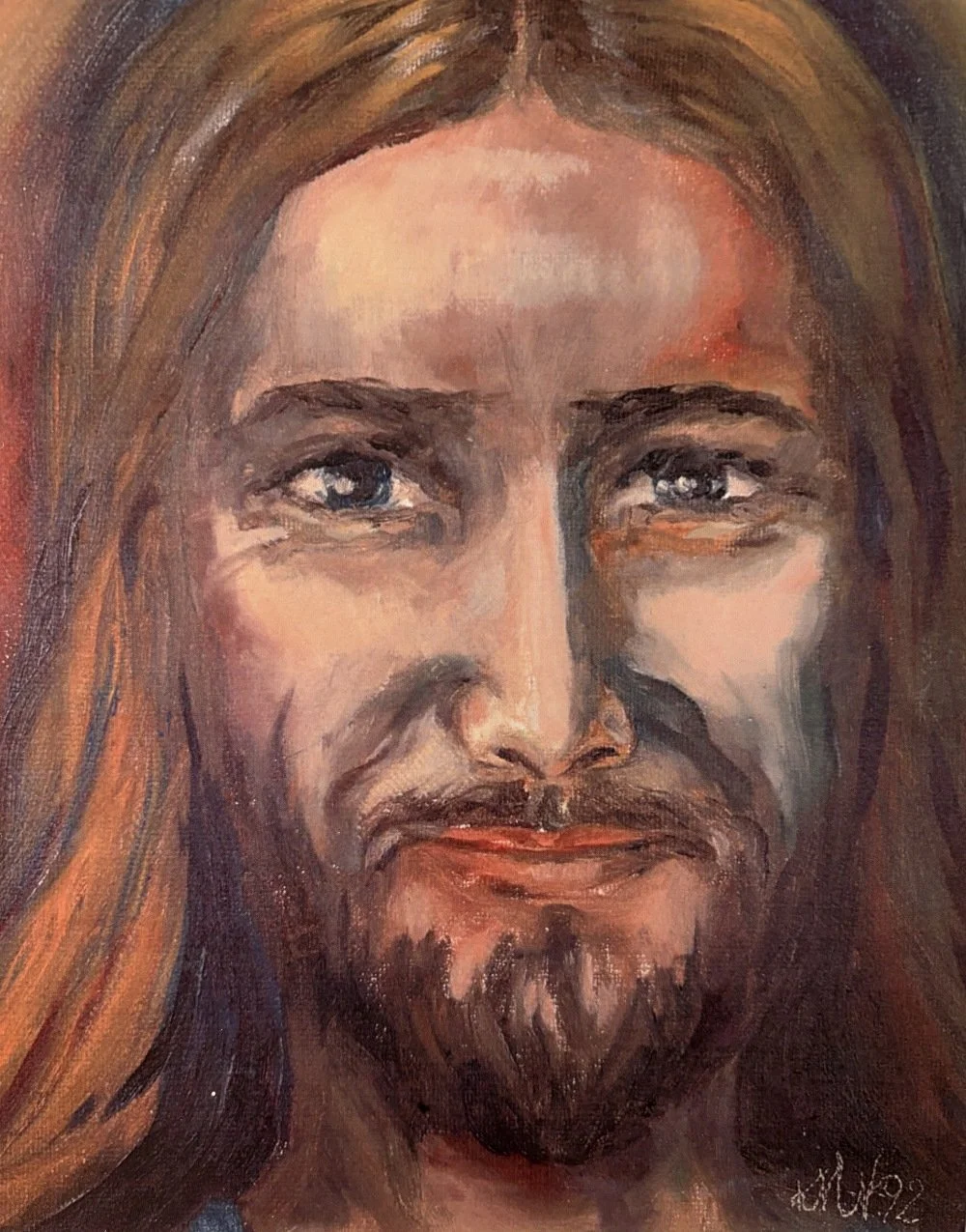
The painting on this page “Glædens Herre “ (The Lord of Joy) was painted by Kirsten Mørch-Nielsen after she had a near death experience.